
News and Insights
2026.08.06Column
The Same Path, Different Journeys
Introduction
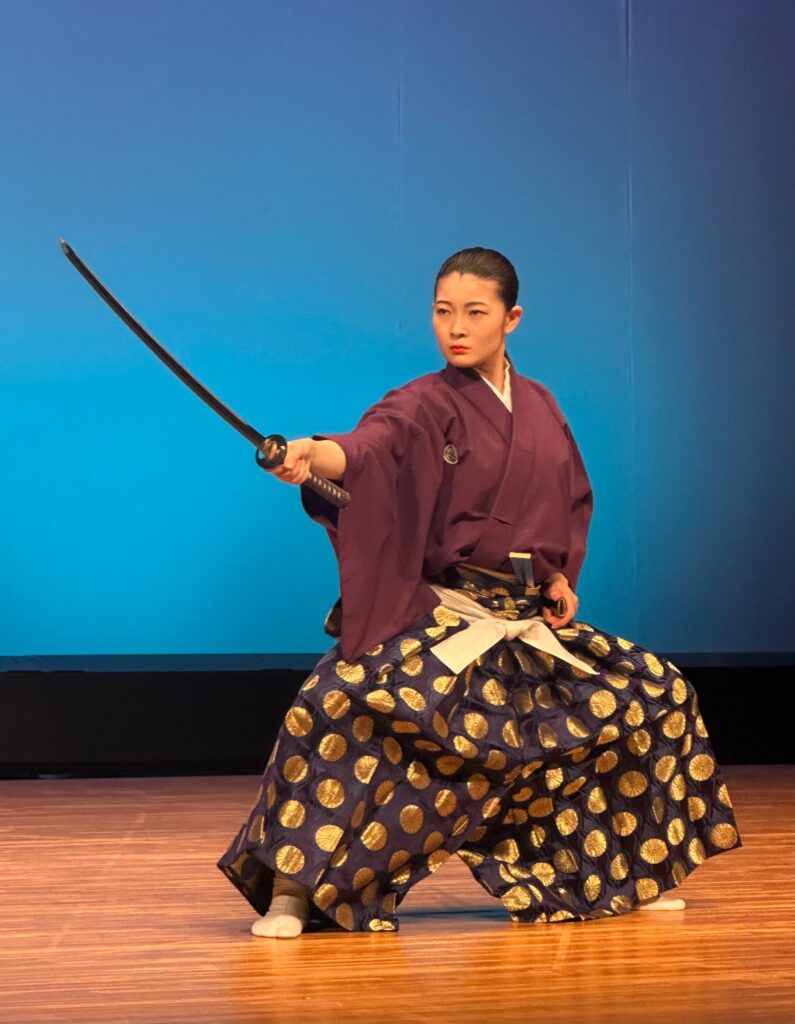
One of the most fascinating aspects of watching Kenbu performances has been seeing the same choreography performed by different practitioners. The music remains unchanged, the accompanying poetry is the same, and the sequence of movements follows the established tradition. Yet each performance feels subtly different.
At first, I assumed this difference came simply from experience or technical ability. However, the more performances I watched, the more I began to notice something else. Every performer seemed to bring their own character to the choreography. Small differences in timing, posture, pace, and expression gave each performance its own identity without ever departing from the traditions of Kenbu.
This made me reflect on an interesting question: how does individuality exist within an art form that values consistency and preservation?
Seeing Tradition Through Different Eyes
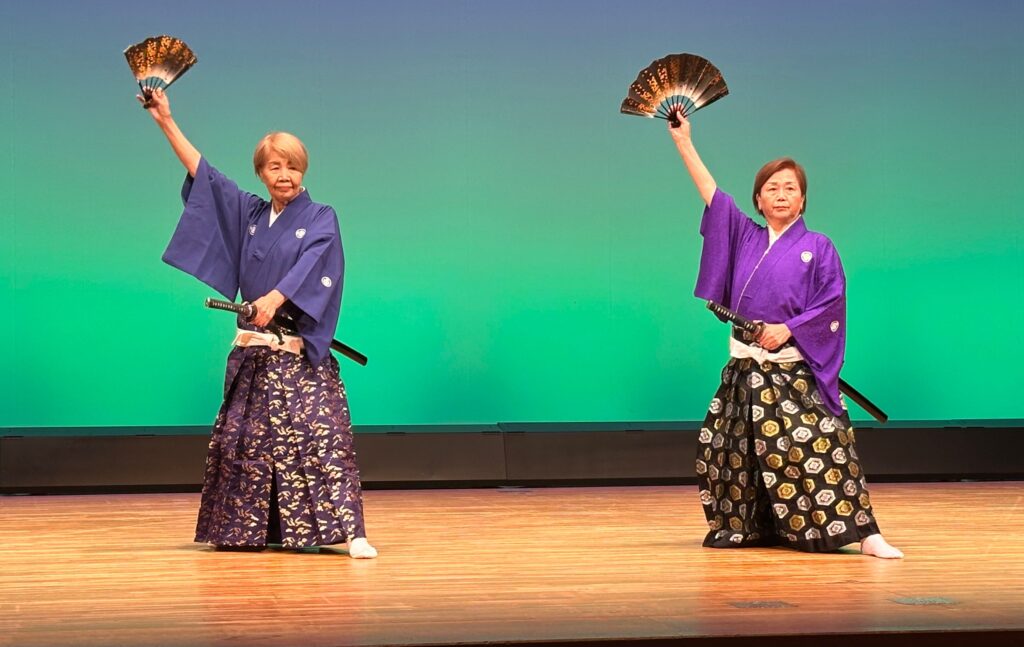
Watching experienced practitioners perform the same piece side by side quickly revealed that no two performances are completely identical.
Some performers move with calm, measured precision, allowing each movement to settle before beginning the next. Others create a stronger sense of momentum, carrying the audience through the choreography with greater energy while remaining equally controlled. Even something as simple asthe direction of a gaze or the timing of a pause can subtly change the atmosphere of a performance.
What impressed me most was that none of these interpretations felt incorrect. Every performer remained faithful to the choreography while naturally emphasising different qualities within it.
The same could also be seen in my teachers. Although they teach the same techniques and share the same principles, each demonstrates movements with their own physical presence. Rather than suggesting there is only one “correct” way to perform, this highlighted how tradition provides aframework within which individual expression can still exist.
Finding Expression Within the Form
As my own training progressed, I discovered that developing an individual style was not something that happened through conscious choice. Instead, it often emerged through understanding my ownbody.
Like many beginners, I initially tried to reproduce every movement exactly as I saw it demonstrated. However, I gradually realised that simply copying another performer is not always physically possible. Differences in height,flexibility, balance, strength, and previous movement experience all influence how a technique feels and how naturally it can be performed.
Coming from a theatre background, I was already familiar with adapting movement to suit different performers. Even so, Kenbu encouraged me to think about this in a different way. Rather than changing the choreography itself, I found myself learning how to perform the existing movements more efficiently within the capabilities of my own body.
This did not mean abandoning the traditional form. Instead, it meant recognising that authenticity comes not from imitation, but from understanding how traditional movement can be expressed with control, stability, and confidence.
Between Script and Performance
This gradual realisation reminded me of my experience working in theatre in the UK.
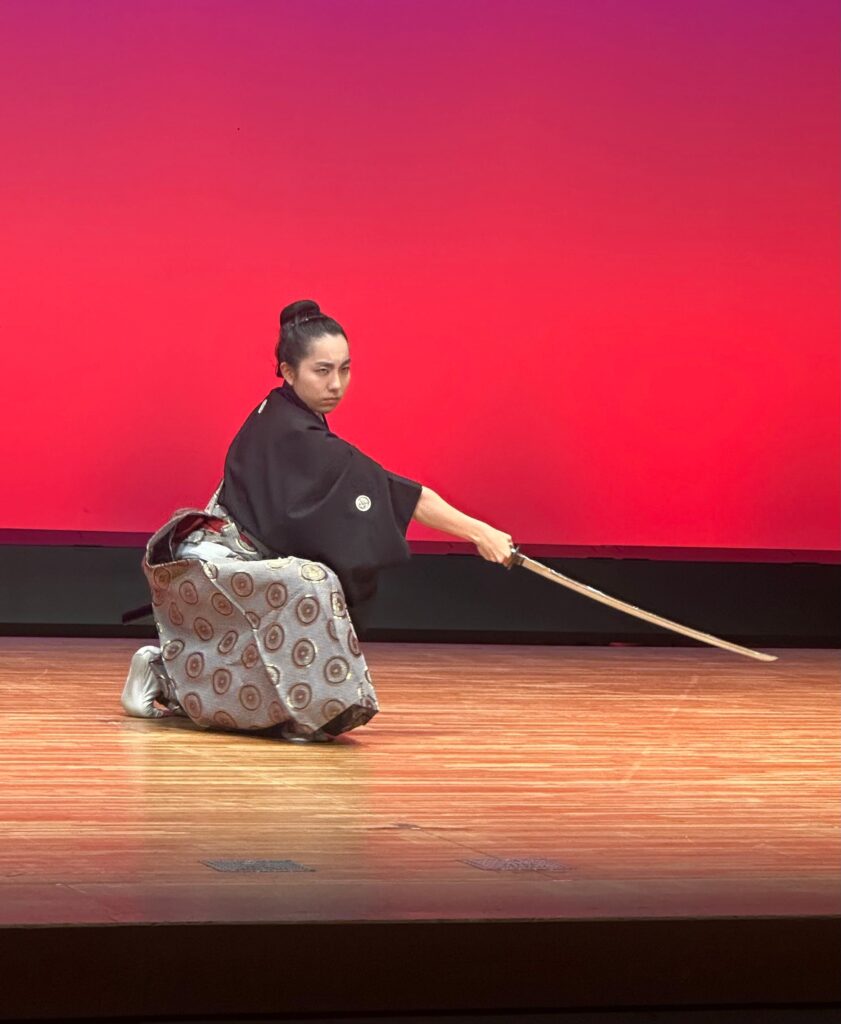
A Shakespeare play such as Hamlet is performed countless times around the world, yet audiences rarely expect every actor to present the character in exactly the same way. The script remains constant, but each performer brings their own interpretation through voice, movement, pacing, and emotional emphasis.
The text provides the structure, while the performer brings it to life.
Watching Kenbu increasingly felt similar. The choreography remains consistent, preserving both the poetry and the tradition, but every practitioner communicates it through their own physicality and experience. Rather than diminishing the tradition, these subtle differences seem to enrich it.
Learning Through Observation
I have come to realise that observation has become an important part of my own training.
Initially, I watched performances simply because I enjoyed them. Over time, however, I began noticing increasingly small details that had previously escaped my attention. The way experienced performers shifted their weight before turning, the control they maintained during moments of stillness, or the confidence with which they held a pause all became lessons in themselves.
These observations also helped me appreciate that experience changes more than technical accuracy. As performers become more familiar with the choreography, they appear to move with greater ease and assurance. Their attention seems to shift away from remembering the sequence towards refining the quality of each individual movement.
Watching others therefore became another form of practice. Even when I was not physically rehearsing, I was learning to see the details that contribute to a polished performance.
One Form, Endless Discoveries
Looking back, one of the greatest lessons Kenbu has taught me so far is that learning extends far beyond practising the choreography itself. Watching others perform has become an important part of my own development, encouraging me to observe more carefully and recognise details that Imight otherwise have overlooked.
As my understanding has grown, I have become less concerned with reproducing movements exactly as I first saw them and more interested in understanding why they are performed in a particular way. That shift in perspective has made training feel richer and more rewarding. Each rehearsal and each performance I watch offers another opportunity to deepen my appreciation of the art.
Perhaps that is one of the enduring strengths of Kenbu. Although the choreography remains unchanged, there is always something new to discover—not by altering the tradition, but by continuing to learn from it