
News and Insights
2026.01.30Column
The Katana: A Blade That Carries a Culture
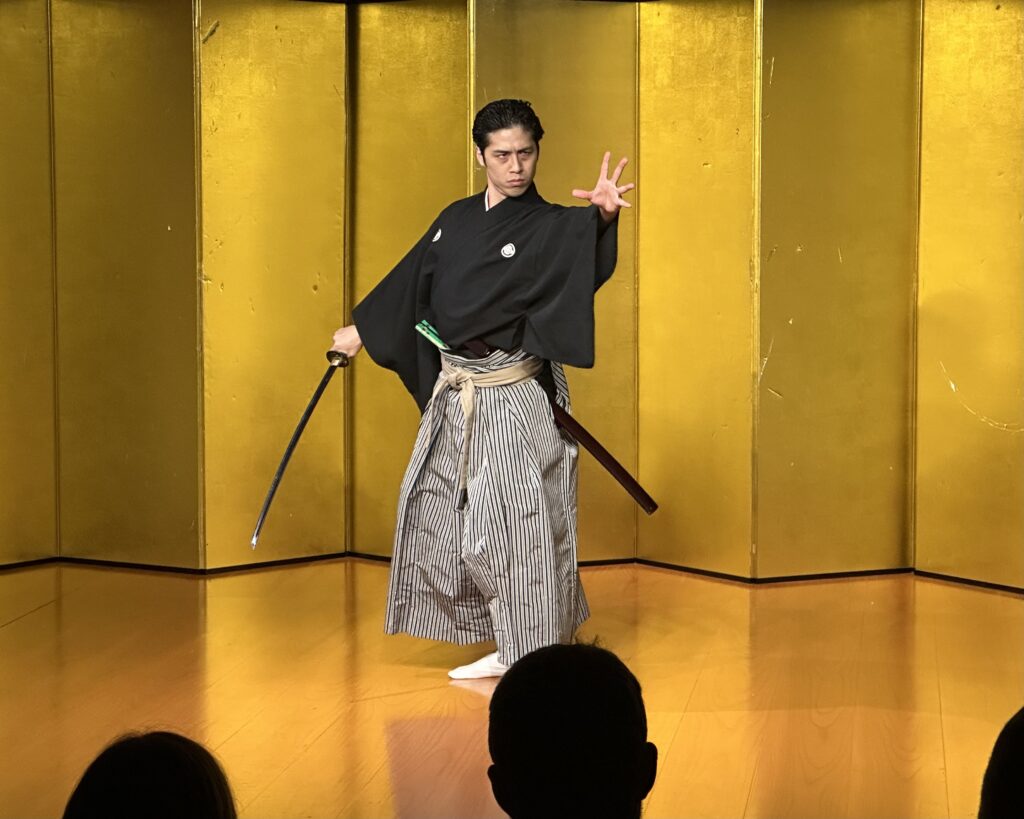
In Japan, the katana is far more than steel shaped into a graceful curve — it carries history, philosophy, and identity. Within the practice of Kenbu, the sword becomes an expressive partner rather than a weapon alone. Every movement is measured and intentional, shaped by centuries of samurai tradition. Training with the katana is not simply about learning technique, but about stepping into a lineage grounded in discipline, honour, and emotional control. Through Kenbu, the body becomes a bridge between past and present.
Linking Stage Combat and Kenbu: A Cross-Cultural Look at the Blade
Working at Shakespeare’s Globe Theatre offered an unexpected point of comparison. The Globe’s professional fight team led demonstrations that combined historical context with theatrical storytelling, revealing how swordplay once shaped character, tension, and narrative clarity on stage.
When watching Kenbu, I often think back to these demonstrations — not because the techniques are similar, but because both traditions use the blade as a teaching tool. In Kenbu, the katana reflects ritual and restraint; at the Globe, swords helped unlock Elizabethan performance practices. In both settings, guided movement and explanation invite participants to step inside a living tradition rather than observe it from a distance.
My time at the National Theatre added another layer to this understanding. During the 2024 production of Coriolanus, the cast trained under fight director Sam Lyon-Behan, whose choreography balanced safety with emotional storytelling. David Oyelowo’s portrayal was particularly striking, with combat sequences described as dance-like, carrying qualities of martial artistry. Though rooted in Roman history and contemporary theatre, the intention felt familiar: the sword was not merely a prop, but a means of revealing inner resolve — much like Kenbu.
The Katana as an Extension of the Body
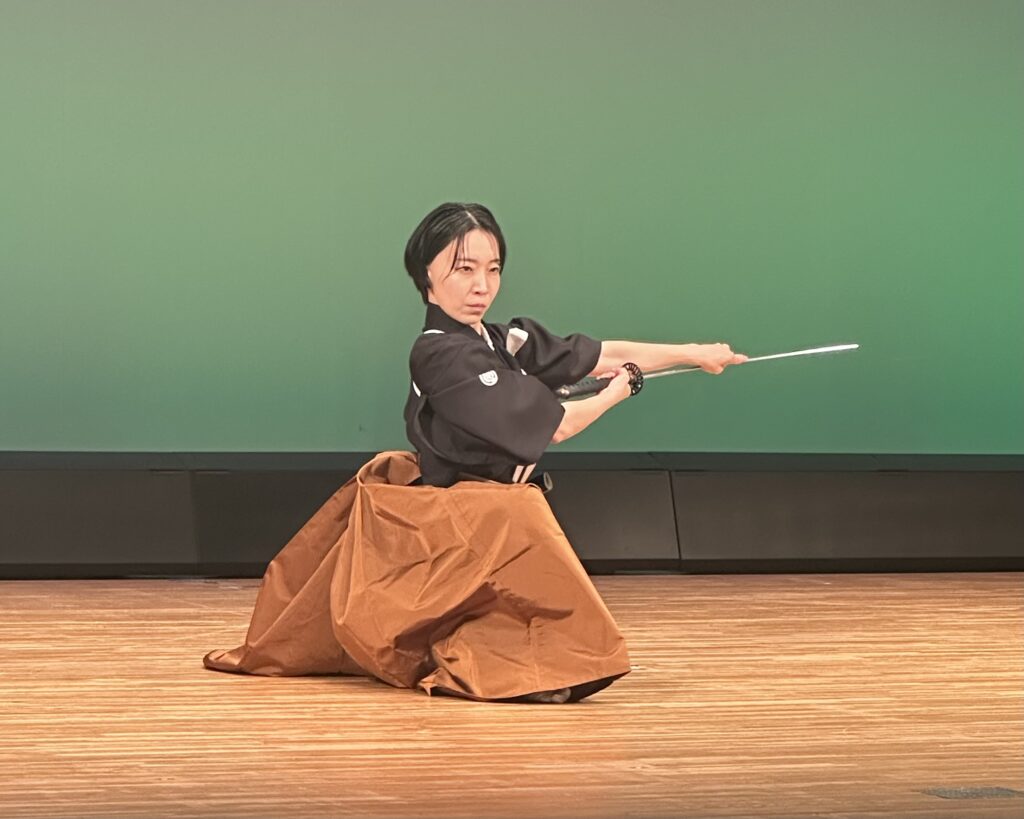
In Kenbu, the katana is treated as an extension of the performer’s intent. Training places emphasis on posture, balance, breath, and spatial awareness, ensuring movement originates from the centre of the body rather than the arms alone. Stillness holds as much meaning as motion, and restraint becomes expressive in its own right, always held in balance with the understanding that the sword carries ethical and spiritual weight beyond performance.
This relationship between body and blade echoes theatrical sword-work in the UK. At both the Globe and the National Theatre, effective combat depends less on force and more on alignment, rhythm, and clarity of intention. Across cultures and performance styles, the sword becomes a channel through which inner focus is made visible.
What These Swords Reveal
Seen together, Kenbu and UK theatre reveal how sword traditions can bridge time and culture.
Kenbu preserves the philosophy of the samurai through embodied practice; the Globe revives early modern storytelling through historically informed performance; and the National Theatre explores emotional truth through contemporary staging. Whether katana, rapier, or gladius, the sword becomes more than an object — it becomes a way of carrying values forward. Through performance, these traditions remain lived, shared, and alive.
CARA SUTCLIFFE
カーラ スクリフ
Cheshire, United Kingdom
Qualifications: MA in Theatre Practice obtained at Staffordshire University
Work experience: Shakespeare’s Globe, the National Theatre
Current status: Working Holiday Visa
Hobbies: Anime, Gaming, Theatre, Art